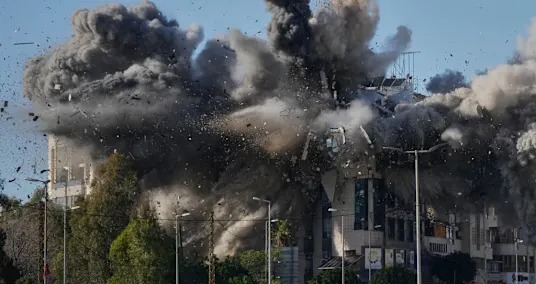
The US-Israel war on Iran and its ripple effect throughout the Middle East have had a devastating impact on Arab countries, with millions expected to slide into poverty, according to the United Nations.
A UN Development Programme (UNDP) report published on Tuesday said that gross domestic product (GDP) in the region was estimated to decline by approximately 3.7 to 6 percent after a month of war, equivalent to a contraction of $120bn to $194bn.
Abdallah Al Dardari, UN assistant secretary-general and director of the UNDP Regional Bureau for Arab States, said that 3.7 million jobs will be lost and about four million more people in the region could fall below the poverty line, noting that the war had highlighted the “fragility in the Arab economy”.
The report was based on projections of “a short but intense conflict lasting for four weeks”, signalling that the impact of the war, which has seen Iran attacking Gulf energy infrastructure and squeezing oil and gas exports through the Strait of Hormuz, will likely be even higher if it drags on longer.
Issued as tight oil supplies pushed Brent crude futures up 4.7 percent to more than $118 per barrel, the report said, “risks in strategic maritime corridors” had “knock‐on effects on inflation, trade flows, and global supply chains” that could undermine livelihoods in the Middle East’s “interconnected economies”.
It added that increases in poverty rates were “concentrated in the Levant and fragile countries (Sudan and Yemen), where baseline vulnerability is highest and shocks translate more strongly into welfare losses”.
The report noted that Lebanon, dragged into the war after Hezbollah struck Israel in retaliation for the US-Israeli killing of Iran’s Supreme Leader Ayatollah Ali Khamenei on February 28, is especially impacted, with “ongoing air strikes and evacuation orders … already causing widespread destruction of residential areas, transport infrastructure, and public services, alongside large‐scale displacement”.
“We hope the fighting will stop tomorrow, as every day of delay has negative repercussions on the global economy,” said Al Dardari.
LATEST POSTS
- 1
 Blood pressure drug recalled for possible cross-contamination
 - 2Electric discovery on Mars! Scientists find tiny lightning bolts coming from Red Planet dust clouds
- 3Minute Maid’s frozen juice concentrate is ending after 80 years — and so is a certain kind of kitchen ritual
- 4Chris Noth responds to backlash after seemingly shading 'Sex and the City' costar Sarah Jessica Parker: 'It is not news'
- 5A definitive Manual for the 5 Off-road Bicycles Available





- 'You're no longer my sister' - rows erupt as war divides Iranian families
- Single women risk rape and exploitation in search for better life in Europe
- Millions in JDM Exports and Exotic Supercars Are Currently Trapped at Sea
- 7 Fun Plans to Make Film Evenings Seriously Energizing (You'll Cherish #5!)
- Figure out How to Use Your Nursing Abilities for Better Compensation
- It's official: NASA's Artemis 2 moon mission will break humanity's all-time distance record
- Scientists have found an alarming environmental impact of vast data centers
- Figure out How to Explore Land Close to 5G Pinnacles
- Trump signs a law returning whole milk to school lunches