When you buy through links on our articles, Future and its syndication partners may earn a commission.

On Wednesday (April 1), NASA launched its history-making Artemis 2 mission, which will see humanity return to the vicinity of the moon for the first time in over half a century. Not only this, but Artemis 2 will carry humans farther into space than they have ever ventured before.
The Artemis 2 mission launched at 6:35 p.m. EDT (2235 GMT) atop the massive Space Launch System rocket from NASA's Kennedy Space Center, sending the Orion space capsule on a trajectory that will see astronauts Victor Glover, Christina Koch, Reid Wiseman and Jeremy Hansen fly a historic 10-day voyage around the moon and back.
As is fitting for such an important event in science history, the launch was captured from a multitude of views in stunning images that immortalize this giant leap for humanity. Want to preserve this historic moment in human spaceflight history? Check out our Artemis 2 gift guide to find the perfect gift for the space fan in your life — or yourself.
Every rocket launch begins with a waiting game. The SLS was rolled out to the historic Launch Pad 39B on March 19 at around 8 p.m. EDT (0000 GMT on March 20), for an agonizing 12-day wait.

Finally, the moment of anticipation arrived with the SLS launching NASA's Reid Wiseman, Victor Glover, Christina Koch, and Jeremy Hansen of the Canadian Space Agency to space. The image below beautifully illustrates the sheer power required to get the four-person crew beyond Earth.

The launch was impressive even from close to 3 miles (5 kilometers) away at the Kennedy Space Center press site.

Space.com's Josh Dinner captured this stunning photograph of the Artemis 2 launch from Kennedy Space Center, Florida.

The sheer power of SLS is plain to see in this shot from the press site, framed by the American and Artemis program flags.

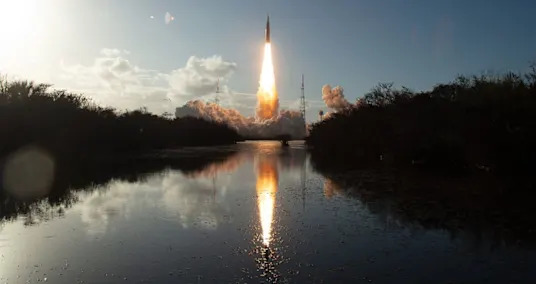
NASA photographer Joel Kowsky captured the plume of fire spewing from SLS as it reflected in the waters surrounding Kennedy Space Center shortly after liftoff.

The image below shows the SLS freeing itself of Earth, hauling the Artemis 2 mission to the darkening skies above Florida.

Finally, the crew of Artemis 2 are well on the way to becoming the first humans to venture to the vicinity of the moon since the Apollo 17 crew in 1972.

Photographers were able to witness the SLS side boosters separate from its core stage shortly after the launch of Artemis 2.

Artemis 2 drew huge crowds to Florida's Space Coast. Hopeful onlookers lined bridges and other viewing areas throughout the region to see the launch in person.

NASA's Kennedy Space Center Visitor's Center was sold out for the event, so crowds lined every available viewing spot throughout the Space Coast.

Stay updated with the latest news about the historic mission with our Artemis 2 live blog. You can also watch the Orion spacecraft on its journey with a live telescope webcast tonight (April 2).
LATEST POSTS
- 1
 74 suicide warnings and 243 mentions of hanging: What ChatGPT said to a suicidal teen
 - 2Vote In favor of Your Favored Pet Consideration Administration
- 3Hot Electric Vehicles for 2023
- 4'Euphoria' Season 3 trailer includes Eric Dane's final appearance, Jacob Elordi and Sydney Sweeney at the altar and Zendaya's 'Breaking Bad' era
- 5Must-See Attractions in France




- What to know about new CDC deputy director who has been critical of COVID vaccines
- My Enterprising Excursion: Building a Startup
- Internet Bookkeeping Programming for Consultants
- The World's Dazzling Regular Miracles
- The 1st full moon of 2026 rises tonight! Here's what to expect from January's supermoon Wolf Moon
- Social Skylines d: A Survey of \Inside and out Social Experiences\ Language Learning Book
- 'A perfect storm': Airlines cut flights and increase airfares as jet fuel price spikes
- Rights groups condemn Israel Police decision to ban Sudan Genocide protests nationwide
- Vote in favor of the Top Vegetable for Senior