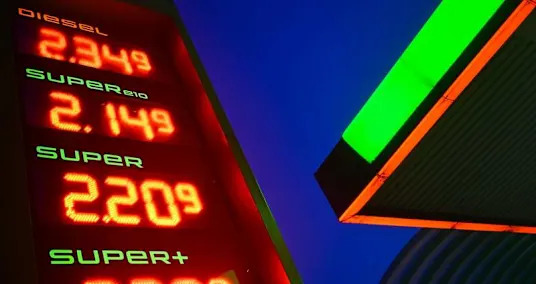

Diesel fuel breached the all-time price record in Germany on Sunday at an average €2.440 ($2.820) per litre, up 1.5 cents from the previous day, according to the ADAC automobile association.
E10 petrol rose by 0.7 cents to an average €2.191 per litre.
In response to soaring oil prices resulting from the war in the Middle East, the German government passed a bill last week to restrict petrol stations to raising prices once a day, at midday, in an effort to limit price fluctuations and ensure greater transparency. The measure went into effect on Wednesday April 1.
A week ago on March 30, Germans paid an average €2.295 for a litre of diesel and €2.087 for a litre of E10 petrol.
Noon on Monday saw further increases, with the average diesel price up 6.6 cents at €2.487 and E10 also up 6.6 cents at €2.235. The ADAC sees the price increases as excessive.
Crude oil prices continued their rise. Brent crude for June delivery came in at $111 per barrel, up almost $40 since the start of the war.
LATEST POSTS
- 1
 Exclusive-Head of Pemex's production arm to step down in coming days, sources say
 - 2Journey Lines for Each Explorer: Track down Your Ideal Journey
- 3We tasted one of the 10,000 Hershey's Dubai chocolate bars being resold on eBay. Is it worth the hype?
- 4Map shows more than 1,900 measles cases across U.S.
- 5Midlife weight gain can start long before menopause – but you can take steps early on to help your body weather the hormonal shift


- EPA watchdog finds nation’s most contaminated sites are vulnerable to flooding, wildfires
- Top 15 Online Entertainment Stages for Individual Marking
- Benin coup thwarted by loyalist troops, president tells nation
- OPEC’s No. 2 Producer Burns Its Own Gas—Then Buys Iran’s
- The most effective method to Move toward Compensation Conversations for Cutting edge Practice Enrolled Attendants
- German unemployment rate falls to 6.4%, but 3 million still jobless
- Philippines evacuates 3,000 villagers after volcano activity raises alert level
- Startled Venezuelans express relief but also fear after Maduro arrest
- Horses really can smell our fear, new study finds